Living in a godly marriage
The Puritans believed that godly marriages were foundational for the future life of families, churches, and nations. Therefore, they wrote prolifically on the subject of marriage, seeking to bring …
- Edition
- -
- ISBN/ISSN
- 978-1-60178-463-6
- Collation
- xvii,268p.; 22 cm.
- Series Title
- -
- Call Number
- 248.844 BEE l
Water from a deep well: Christian spirituality from early martyrs to modern..
In Rome in A.D. 165, two men named Carpus and Papylus stood before the proconsul of Pergamum, charged with the crime of being Christians. Not even torture could make them deny Christ, so they were …
- Edition
- -
- ISBN/ISSN
- 978-0-8308-3745-8
- Collation
- 364p.; 23 cm.
- Series Title
- -
- Call Number
- 248.09 SIT w
Work matters: lessons from Scripture
In Work Matters marketplace theology expert R. Paul Stevens revisits more than twenty biblical accounts ― from Genesis to Revelation ― exploring through them the theological meaning of every so…
- Edition
- -
- ISBN/ISSN
- 978-0-8028-6696-7
- Collation
- viii,176p.; 23 cm.
- Series Title
- -
- Call Number
- 248.88 STE w
From good news to gospels: what did the first Christians say about Jesus
The good news of Jesus spread like wildfire through the Roman Empire in the decades between his death and the writing of the first gospels—but how? What exactly did the first Christians say about…
- Edition
- -
- ISBN/ISSN
- 978-0-8028-7368-2
- Collation
- xx,124p.; 23 cm.
- Series Title
- -
- Call Number
- 232.09 WEN f
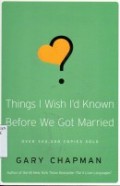
Things I wish I'd known before we got married
Best selling author and marriage counselor, Gary Chapman, hopes to change that with his newest book. Gary, with more than 35 years of counseling couples, believes that divorce is the lack of prepar…
- Edition
- -
- ISBN/ISSN
- 978-0-8024-8183-2
- Collation
- 166p.; 20 cm.
- Series Title
- -
- Call Number
- 248.844 CHA t
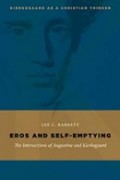
Eros and self-emptying: the intersections of Augustine and Kierkegaard
In this book -- the first volume in the Kierkegaard as a Christian Thinker series -- Lee Barrett offers a novel comparative interpretation of early church father Augustine and nineteenth-century ph…
- Edition
- -
- ISBN/ISSN
- 978-0-8028-6805-3
- Collation
- xiv,414p.; 24 cm.
- Series Title
- -
- Call Number
- 230.092 BAR e
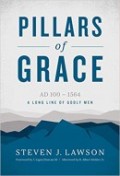
Pillars of grace: AD 100-1564
The doctrines of grace are often known as the five points of Calvinism, but they were not the invention of John Calvin or his reforming cohorts of the sixteenth century. Rather, they are biblical d…
- Edition
- -
- ISBN/ISSN
- 978-1-56769-688-2
- Collation
- 483p.; 24 cm.
- Series Title
- -
- Call Number
- 234.1 LAW p
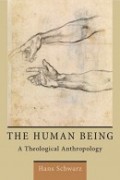
The human being: a theological anthropology
Schwarz begins by elucidating the special place occupied by human beings in the world, then ponders the complex issue of human freedom, and concludes by investigating humanity as a community of men…
- Edition
- -
- ISBN/ISSN
- 978-0-8028-7088-9
- Collation
- xiv,402p.; 23 cm.
- Series Title
- -
- Call Number
- 233 SCH h
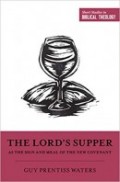
The Lord's supper: as the sign and meal of the new covenant
The Lord’s Supper is more than a church tradition or a complex doctrinal controversy―it has practical importance to our daily lives. When Jesus instituted the Supper, it was meant to strengthen…
- Edition
- -
- ISBN/ISSN
- 978-1-4335-5837-5
- Collation
- 127p.; 21 cm.
- Series Title
- -
- Call Number
- 234.163 WAT l
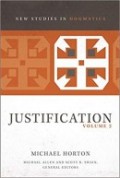
Justification, v.2
The doctrine of justification stands at the center of our systematic reflection on the meaning of salvation as well as our piety, mission, and life together. In his two-volume work on the doctrine …
- Edition
- -
- ISBN/ISSN
- 978-0-310-57838-3
- Collation
- 527p.; 23 cm.
- Series Title
- -
- Call Number
- 234.7 HOR j/2


 Computer science, information & general works
 Philosophy & psychology
 Religion
 Social sciences
 Language
 Pure Science
 Applied sciences
 Arts & recreation
 Literature
 History & geography