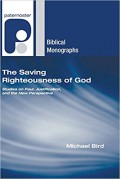
The saving righteousness of God: studies on Paul, justification and..
This book presents a series of studies on contentious aspects of Paul's doctrine of justification including the meaning of "righteousness," the question of imputation, the role of resurrection in j…
- Edition
- -
- ISBN/ISSN
- 978-1-55635-274-4
- Collation
- xv,230p.; 23 cm.
- Series Title
- -
- Call Number
- 231.765 BIR s

The modern study of the Mishnah
The Mishnah of Judah the Patriarch, produced about 200 A.D., not only stood at the end of approximately a hundred and thirty years of rabbinic legal study, but also laid the foundations for the nex…
- Edition
- -
- ISBN/ISSN
- 1-59244-217-X
- Collation
- xxvii,283p.; 22 cm.
- Series Title
- -
- Call Number
- 296.123 NEU m
Wishful thinking
In Wishful Thinking, the first book in his much-loved lexical trilogy, Frederick Buechner puts the language of God, the universe, and the human spirit under his wry linguistic microscope. In his of…
- Edition
- -
- ISBN/ISSN
- -
- Collation
- xii,100p.; 21 cm.
- Series Title
- -
- Call Number
- 230.01 BUE w
Heart and mind: studies in the philosophy of Christian experience
In an earlier study of the Methodist Revival from the point of view of modern psychology, the author found it impossible to keep within the borders of the psychological field, and the nature of his…
- Edition
- -
- ISBN/ISSN
- -
- Collation
- 269p.; 22 cm.
- Series Title
- -
- Call Number
- 230.01 DIM h

Calvin and classical philosophy, c.1-2
In designating his work as "Christian philosophy," John Calvin uses a term which, in the sixteenth century, refers to the theological program of the Christian humanists in general. This program is …
- Edition
- -
- ISBN/ISSN
- 90-04-04839-1
- Collation
- 163p.; 25cm.
- Series Title
- -
- Call Number
- 230.42 BRI c.1-2
Training in Christianity and the edifying discourse which.., c.1-2
This volume, and another of equal size which the author propose to bring out on the same date, contain between them six works which originally were published separately, but which now are all of th…
- Edition
- -
- ISBN/ISSN
- -
- Collation
- xxvii,275p.; 21 cm.
- Series Title
- -
- Call Number
- 230.01 KIE t.1-2
Theology and proclamation: dialogue with Bultmann
Our concern is proclamation. Now it may seem that proclamation and concern are ill-matched partners. An essential part of proclamation is certainty and from this should spring joy.
- Edition
- -
- ISBN/ISSN
- -
- Collation
- 186p.; 21 cm.
- Series Title
- -
- Call Number
- 230.01 EBE t
New meanings for new beings
- Edition
- -
- ISBN/ISSN
- -
- Collation
- xvii,267p.; 22 cm.
- Series Title
- -
- Call Number
- 230.01 LUE n
- Edition
- -
- ISBN/ISSN
- -
- Collation
- xvii,267p.; 22 cm.
- Series Title
- -
- Call Number
- 230.01 LUE n

Religion within the limits of reason alone, c.1-3
The enlightment, which began in th3e seventeenth century and flourished in the eighteenth, constitutes one of the great spiritual movements of modern Europe. In it we see the Renaissance working it…
- Edition
- -
- ISBN/ISSN
- 0-06-130067-5
- Collation
- cxlv,195p.; 20 cm.
- Series Title
- -
- Call Number
- 201 KAN r.1-3

Zohar: the book of enlightenment
Zohar-"the book of Splendor, Radiance, Enlightenment"--has fascinated readers from its first appearance in thirteenth-century Spain until today. It is the major text of Kabbalah, the Jewish mystica…
- Edition
- -
- ISBN/ISSN
- 0-8091-2387-8
- Collation
- xvi, 320p.; 23 cm.
- Series Title
- Classics of Western Spirituality
- Call Number
- 194 MAT z




 Computer science, information & general works
 Philosophy & psychology
 Religion
 Social sciences
 Language
 Pure Science
 Applied sciences
 Arts & recreation
 Literature
 History & geography