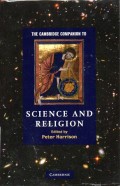
The Cambridge companion to science and.., c.1-2
In recent years, the relations between science and religion have been the object of renewed attention. Developments in physics, biology and the neurosciences have reinvigorated discussions about th…
- Edition
- -
- ISBN/ISSN
- 978-0-521-71251-4
- Collation
- xi,308p.; 23 cm.
- Series Title
- -
- Call Number
- 201.65 HAR c.1-2
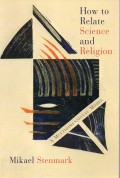
How to relate science and religion
Written by Templeton Prize-winner Mikael Stenmark, How to Relate Science and Religion points an exciting way forward in the effort to reconcile what are arguably the two most powerful cultural forc…
- Edition
- -
- ISBN/ISSN
- 0-8028-2823-X
- Collation
- xx,287p.; 23 cm.
- Series Title
- -
- Call Number
- 201.65 STE h
The structure of scientific theories
A major change in the Philosophy of Science occurred in 1976. The prior fifty years had been dominated by the idea that human language either represented mathematical and logical descriptions of th…
- Edition
- -
- ISBN/ISSN
- 0-252-00634-8
- Collation
- xiv,818p.; 23 cm.
- Series Title
- -
- Call Number
- 501 SUP s

The creative peace
The author introduces an entirely different set of terms, ideas and approaches in how to deal with cdonfronted global problems. The essence of our problem is avoiding imperium while maintaining hum…
- Edition
- -
- ISBN/ISSN
- 978-89-7152-061-1
- Collation
- xxiii, 468p.; 24 cm.
- Series Title
- -
- Call Number
- 144 WON c

Ritualizing nature: renewing Christian liturgy..
Is the Christian faith ecologically bankrupt? The author has responded forcefully to that frequently voiced critical question. He has maintained that, notwithstanding ambiguities, a single Christia…
- Edition
- -
- ISBN/ISSN
- 978-0-8006-6294-3
- Collation
- xvi,312p.; 23 cm.
- Series Title
- -
- Call Number
- 264.001 SAN r

Morality and moral theory: a reappraisal and reaffirmation
Contemporary philosophers have grown increasingly skeptical toward both morality and moral theory. "Antimorality" skeptics argue that moral considerations are not always the most important consider…
- Edition
- -
- ISBN/ISSN
- 0-19-507292-8
- Collation
- x,230p.; 24 cm.
- Series Title
- -
- Call Number
- 170 LOU m
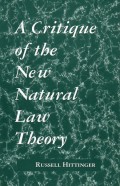
A critique of the new natural law theory
The book is written in a clear and forceful style. It is ideal for use in ethics and logic classes as a model of critical reasoning, although its principal audience will no doubt be philosophers an…
- Edition
- -
- ISBN/ISSN
- 0-268-00775-6
- Collation
- vi,232p.; 22 cm.
- Series Title
- -
- Call Number
- 340.1 HIT c

A concise encyclopedia of the philosophy of religion
With entries on everything from agnosticism to Zen Philosophy, this concise and authoritative encyclopedia from one of the world's most renowned theologians explores all the major themes in the phi…
- Edition
- -
- ISBN/ISSN
- 1-85168-301-1
- Collation
- viii, 344p.; 23 cm
- Series Title
- -
- Call Number
- R 201.03 THI c
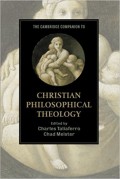
The Cambridge companion to Christian philosophical.., c.1-2
This companion offers an up-to-date overview of the beliefs, doctrines and practices of the key philosophical concepts at the heart of Christian theology. The sixteen chapters, commissioned specia…
- Edition
- -
- ISBN/ISSN
- 978-0-521-73037-2
- Collation
- xv,265p.; 23 cm.
- Series Title
- -
- Call Number
- 230.01 TAL c.1-2

Nature's witness: how evolution can inspire faith
Walking across the Boston common one cold winter's eve, the author was approached by a gentleman, somewhat agitated, who recognized him from church. Are you the minister who's writing the book on e…
- Edition
- -
- ISBN/ISSN
- 978-0-687-64235-9
- Collation
- x,165p.; 23 cm.
- Series Title
- -
- Call Number
- 231.765 HAR n




 Computer science, information & general works
 Philosophy & psychology
 Religion
 Social sciences
 Language
 Pure Science
 Applied sciences
 Arts & recreation
 Literature
 History & geography