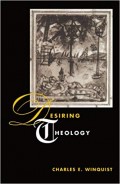
Desiring theology
One of the foremost scholars exploring the intersection of theology and continental philosophy, Charles E. Winquist argues for the possibility of theological thinking in a postmodern secular milieu…
- Edition
- -
- ISBN/ISSN
- 979-8131-10-X
- Collation
- x,165p.; 21 cm.
- Series Title
- -
- Call Number
- 230.01 WIN d
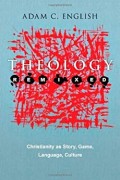
Theology remixed: Christianity as story, game, language.., c.1-5
Jesus often told stories, made comparisons, drew contrasts. He talked of mustard seed, of yeast and of a hidden treasure to communicate some of the most important truths of the faith. Parables were…
- Edition
- -
- ISBN/ISSN
- 978-0-8308-3874-5
- Collation
- 208p.; 23 cm.
- Series Title
- -
- Call Number
- 230.01 ENG t.1-5
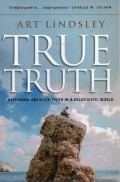
True truth: defending absolute truth in relativistic age
Conventional wisdom holds that any belief in absolutes, especially of a religious nature, leads inevitably to the oppressive absolutism of such movements as the Inquisition, the Crusades and even N…
- Edition
- -
- ISBN/ISSN
- 0-8308-3235-1
- Collation
- 188p.; 22 cm.
- Series Title
- -
- Call Number
- 230.01 LIN t
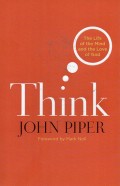
Think: the life of the mind and the love of God
We often pit thinking and feeling against each other, especially when it comes to the Christian experience. Glorifying God with our minds and hearts, however, is not either-or, but both-and. Focusi…
- Edition
- -
- ISBN/ISSN
- 978-1-4335-2318-2
- Collation
- 222p.; 2010
- Series Title
- -
- Call Number
- 230.01 PIP t
How to think theologically, 2E, c.1-2
For over fifteen years, How to Think Theologically has served as the ideal primer on the work of theology for students at all levels of study. Stone and Duke contend that theology is not an optiona…
- Edition
- -
- ISBN/ISSN
- 978-0-8006-9932-1
- Collation
- xv,143p.; 20 cm.
- Series Title
- -
- Call Number
- 230.01 STO h.1-2
Can a Darwinian be a Christian: the relationship between science and religion
This book, first published in 2000, adopts a balanced perspective on the subject to offer a serious examination of both Darwinism and Christianity. He covers a wide range of topics, from the Scopes…
- Edition
- -
- ISBN/ISSN
- 0-521-63144-0
- Collation
- xi,242p.; 23 cm.
- Series Title
- -
- Call Number
- 231.765 RUS c
Teleology revisited and other essays in the philosophy..
Ernest Nagel, one of the world's leading philosophers of science, is an unreconstructed empirical rationalist who continues to believe that the logical methods of the modern natural sciences are th…
- Edition
- -
- ISBN/ISSN
- 0-231-04505-0
- Collation
- 352p.; 23 cm.
- Series Title
- -
- Call Number
- 501 NAG t
Mere creation: science, faith & intelligent design
In this book Behe is joined by eighteen other expert academics trained in mathematics, mechanical engineering, philosophy, physical anthropology, physics, astrophysics, biology, ecology and evoluti…
- Edition
- -
- ISBN/ISSN
- 0-8308-1515-5
- Collation
- 475p.; 23 cm.
- Series Title
- -
- Call Number
- 501 DEM m

The great partnership: science, religion and the search for meaning
Impassioned, erudite, thoroughly researched, and beautifully reasoned, The Great Partnership argues not only that science and religion are compatible, but that they complement each other—and that…
- Edition
- -
- ISBN/ISSN
- 978-0805212501
- Collation
- xi,370p.; 20 cm.
- Series Title
- -
- Call Number
- 201.65 SAC g

Twentieth-century philosophy of religion, v.5: the history of western..
The twentieth century saw religion challenged by the rise of science and secularism, a confrontation which resulted in an astonishingly diverse range of philosophical views about religion and relig…
- Edition
- -
- ISBN/ISSN
- 978-1-84465-685-1
- Collation
- xvi,350p.; 24 cm.
- Series Title
- -
- Call Number
- 201 OPP t/5



 Computer science, information & general works
 Philosophy & psychology
 Religion
 Social sciences
 Language
 Pure Science
 Applied sciences
 Arts & recreation
 Literature
 History & geography