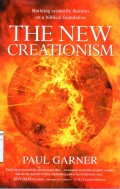
The new creationism: building scientific theories..
The academic culture in which science is practiced today is one of tacit - if not explicit - atheism. Nowhere is this more evident than in the scientific study of how the universe began and develop…
- Edition
- -
- ISBN/ISSN
- 0-85234-692-1
- Collation
- 300p.; 22 cm.
- Series Title
- -
- Call Number
- 201.65 GAR n
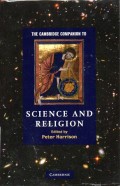
The Cambridge companion to science and.., c.1-2
In recent years, the relations between science and religion have been the object of renewed attention. Developments in physics, biology and the neurosciences have reinvigorated discussions about th…
- Edition
- -
- ISBN/ISSN
- 978-0-521-71251-4
- Collation
- xi,308p.; 23 cm.
- Series Title
- -
- Call Number
- 201.65 HAR c.1-2
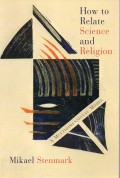
How to relate science and religion
Written by Templeton Prize-winner Mikael Stenmark, How to Relate Science and Religion points an exciting way forward in the effort to reconcile what are arguably the two most powerful cultural forc…
- Edition
- -
- ISBN/ISSN
- 0-8028-2823-X
- Collation
- xx,287p.; 23 cm.
- Series Title
- -
- Call Number
- 201.65 STE h

Cosmos, bios, Theos: scientists reflect on science, God and the..
This book is a portfolio of opinions and arguments from 60 scientists, including 24 Nobel Prize winners, on the relationshiip between the scientific enterprise and the religious view of reality. "C…
- Edition
- -
- ISBN/ISSN
- 0-8126-9185-7
- Collation
- xiii,285p.; 23 cm.
- Series Title
- -
- Call Number
- 215 MAR c
The structure of scientific theories
A major change in the Philosophy of Science occurred in 1976. The prior fifty years had been dominated by the idea that human language either represented mathematical and logical descriptions of th…
- Edition
- -
- ISBN/ISSN
- 0-252-00634-8
- Collation
- xiv,818p.; 23 cm.
- Series Title
- -
- Call Number
- 501 SUP s

Faith seeking understanding: approaching God through
Given the loving, personal God of the Judeo-Christian tradition, it seems one must regard science as a gift from the Creator, rather than an intrinsic enemy of the same creative act. We would not e…
- Edition
- -
- ISBN/ISSN
- 978-0-8091-4451-8
- Collation
- viii,168p.; 23 cm.
- Series Title
- -
- Call Number
- 261.55 SHA f

God, creation and contemporary physics
Author describes the critique of traditional arguments for God's existence by physicists. He then examines three Christian doctrines in light of theoretical physics--God and creation out of nothing…
- Edition
- -
- ISBN/ISSN
- 0-8006-2906-X
- Collation
- vii, 260p.; 23 cm.
- Series Title
- -
- Call Number
- 261.55 WOR g
Beyond belief: faith, science and the value of unknowing
The current age marks the transition from modernity to postmodernity, a period as impactful to the western sensibility as any preview era. The role of religion and the future of christianity are at…
- Edition
- -
- ISBN/ISSN
- 978-1-62032-474-5
- Collation
- -
- Series Title
- -
- Call Number
- 261.55 KAP b

The selfless gene: living with God and Darwin
In recent years the proponents of two rival ideologies have battled for centre stage. According to Neo-Darwinists, the pressure of natural selection is an explanation for everything we see in the n…
- Edition
- -
- ISBN/ISSN
- 978-0-340-96436-1
- Collation
- xviii,270p.; 23 cm.
- Series Title
- -
- Call Number
- 261.55 FOS s

Light from the east: theology, science and Eastern Orthodox..
Nesteruk goes through a number of major issues in big science to show how each one ends up at an antinomy (Kantian style) which can only be "resolved" by seeing the tension itself as a divinely man…
- Edition
- -
- ISBN/ISSN
- 0-8006-3499-3
- Collation
- viii,287p.; 23 cm.
- Series Title
- -
- Call Number
- 261.55 NES l



 Computer science, information & general works
 Philosophy & psychology
 Religion
 Social sciences
 Language
 Pure Science
 Applied sciences
 Arts & recreation
 Literature
 History & geography