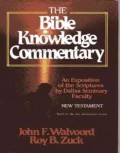
The Bible knowledge commentary: an exposition of the scriptures.., New Testam…
- Edition
- -
- ISBN/ISSN
- 0-88207-812-7
- Collation
- 991p.; 24 cm.
- Series Title
- -
- Call Number
- R 225.7 WAL b.1-3
- Edition
- -
- ISBN/ISSN
- 0-88207-812-7
- Collation
- 991p.; 24 cm.
- Series Title
- -
- Call Number
- R 225.7 WAL b.1-3
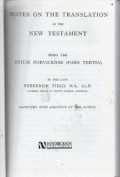
Notes on the translation of the New Testament, c.1-2
While Frederick Field’s Notes on the Translation of the New Testament contain many grammatical observations, they are structured more like a commentary than a grammar. The book is organized by Bi…
- Edition
- -
- ISBN/ISSN
- 1-56563-080-7
- Collation
- xvii,267p.; 22 cm.
- Series Title
- -
- Call Number
- 225.52 FIE n.1-2
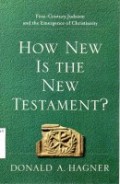
How new is the New Testament: first-century Judaism and the emergence of Chri…
"Old or new? Continuity or discontinuity? In his survey of the New Testament, Hagner demonstrates why it is not a case of either/or but of both/and--and indeed why continuity and discontinuity are …
- Edition
- -
- ISBN/ISSN
- 978-1-5409-6041-2
- Collation
- xii,211p.; 23 cm.
- Series Title
- -
- Call Number
- 225.6 HAG h
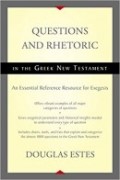
Questions and rhetoric in the Greek New Testament: an essential reference..
Questions and Rhetoric in the Greek New Testament is a helpful and thorough examination of questions in the Greek New Testament, seen from the standpoint of grammatical, semantic, and linguistic an…
- Edition
- -
- ISBN/ISSN
- 978-0-310-51635-4
- Collation
- 395p.; 23 cm.
- Series Title
- -
- Call Number
- 225.486 EST q
Quest for the historical apostles: tracing their lives and legacies
The stories and contributions of the apostles provide an important entrée into church history. This comprehensive historical and literary introduction uncovers their lives and legacies, underscori…
- Edition
- -
- ISBN/ISSN
- 978-0-8010-9855-0
- Collation
- xiii,314p.; 23 cm.
- Series Title
- -
- Call Number
- 225.922 SHE q

Preaching the word, v.19: John
While each of the Gospels presents Christ with a distinct emphasis, the Gospel of John focuses on his greatness—as the timeless Creator-God of the universe, as the Word made flesh, as the graciou…
- Edition
- -
- ISBN/ISSN
- 1-58134-101-6
- Collation
- 527p.; 23 cm.
- Series Title
- -
- Call Number
- R 220.7 HUG p/19.1-2
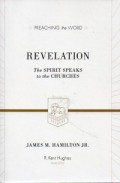
Preaching the word, v.32: Revelation
In the book of Revelation, God unveils the world as it really is, identifying an unseen spiritual war and announcing a very real day of judgment. As the end approaches, we need to be convinced that…
- Edition
- -
- ISBN/ISSN
- 978-1-4335-0541-6
- Collation
- 457p.; 24 cm.
- Series Title
- -
- Call Number
- R 220.7 HUG p/32
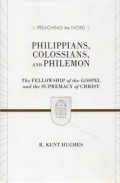
Preaching the word, v.25: Philippians, Colossians and Philemon, c.1-2
Paul’s epistles to the churches of Philippi and Colossae, and to Philemon stand together as some of the most profound illustrations of the unifying power of the gospel in all of Scripture. Highli…
- Edition
- -
- ISBN/ISSN
- 978-1-4335-3630-4
- Collation
- 431p.; 23 cm.
- Series Title
- -
- Call Number
- R 220.7 HUG p/25.1-2
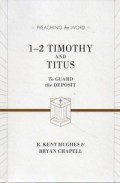
Preaching the word, v.27: 1-2 Timothy
There are substantial reasons to be energized about studying the Pastoral Letters of Paul. Between them they teach the proper ordering of the church (1 Timothy), they present a developed challenge …
- Edition
- -
- ISBN/ISSN
- 978-1-4335-3053-1
- Collation
- 457p.; 24 cm.
- Series Title
- -
- Call Number
- R 220.7 HUG p/27
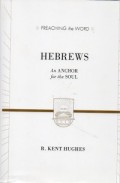
Preaching the word, v.28: Hebrews
The book of Hebrews conveys a double dose of spiritual power: it not only presents the supremacy of Jesus Christ unlike any other New Testament book, but it also repeatedly demands a heart response…
- Edition
- -
- ISBN/ISSN
- 978-14335-3842-1
- Collation
- 543p.; 24 cm.
- Series Title
- -
- Call Number
- R 220.7 HUG p/28

 Computer science, information & general works
 Philosophy & psychology
 Religion
 Social sciences
 Language
 Pure Science
 Applied sciences
 Arts & recreation
 Literature
 History & geography