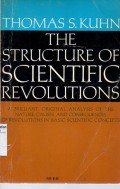
The structure of scientific revolution: a brilliant, original.., c.1-2
When it was first published in 1962, this book was a landmark event in the history and philosophy of science. Fifty years later, it still has many lessons to teach. With this book, the author chall…
- Edition
- -
- ISBN/ISSN
- -
- Collation
- 172p.; 21 cm.
- Series Title
- -
- Call Number
- 500 KUH s.1-2
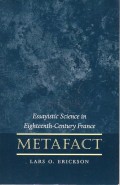
Metafact: essayistic science in eighteenth-century France
Why is science often considered the opposite of literature? Lars O. Erickson examines the relationship between these two fields in eighteenth-century France and finds that the major intellectual an…
- Edition
- -
- ISBN/ISSN
- 0-8078-9282-3
- Collation
- 195p.; 23 cm.
- Series Title
- -
- Call Number
- 509.44 ERI e
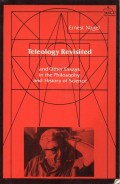
Teleology revisited and other essays in the philosophy..
Ernest Nagel, one of the world's leading philosophers of science, is an unreconstructed empirical rationalist who continues to believe that the logical methods of the modern natural sciences are th…
- Edition
- -
- ISBN/ISSN
- 0-231-04505-0
- Collation
- 352p.; 23 cm.
- Series Title
- -
- Call Number
- 501 NAG t
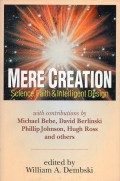
Mere creation: science, faith & intelligent design
In this book Behe is joined by eighteen other expert academics trained in mathematics, mechanical engineering, philosophy, physical anthropology, physics, astrophysics, biology, ecology and evoluti…
- Edition
- -
- ISBN/ISSN
- 0-8308-1515-5
- Collation
- 475p.; 23 cm.
- Series Title
- -
- Call Number
- 501 DEM m
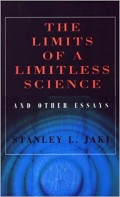
The limits of a limitless sciences and other essays
A collection of 15 essays from an authority on the relationship between science and religion, overviewing the intersection of science with areas of human culture. Written over a period of seven yea…
- Edition
- -
- ISBN/ISSN
- 1-882926-46-3
- Collation
- x,247p.; 23 cm.
- Series Title
- -
- Call Number
- 500 JAK l
Mysteries of life and the universe: new essays from..
- Edition
- -
- ISBN/ISSN
- 0-15-163972-8
- Collation
- 277p.; 23 cm.
- Series Title
- -
- Call Number
- 500 SHO m
- Edition
- -
- ISBN/ISSN
- 0-15-163972-8
- Collation
- 277p.; 23 cm.
- Series Title
- -
- Call Number
- 500 SHO m
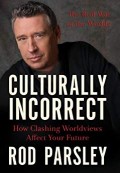
Culturally incorrect: how clashing worldviews affect...
Parsley exposes the failure of the current generation of believers to engage the culture, present a relevant gospel, and lead/influence through service - and paints a vivid picture of the cost and …
- Edition
- -
- ISBN/ISSN
- 1-59951-013-8
- Collation
- xxii,227p.; 24 cm
- Series Title
- -
- Call Number
- 320 PAR c

Dictionary of Christianity and science: the definitive reference..
, the Dictionary of Christianity and Science is a deeply-researched, peer-reviewed, fair-minded work that illuminates the intersection of science and Christian belief. In one volume, you get reliab…
- Edition
- -
- ISBN/ISSN
- 978-0-310-49605-2
- Collation
- 691p.; 24 cm.
- Series Title
- -
- Call Number
- R 261.55 COP d

The great partnership: science, religion and the search for meaning
Impassioned, erudite, thoroughly researched, and beautifully reasoned, The Great Partnership argues not only that science and religion are compatible, but that they complement each other—and that…
- Edition
- -
- ISBN/ISSN
- 978-0805212501
- Collation
- xi,370p.; 20 cm.
- Series Title
- -
- Call Number
- 201.65 SAC g

Signposts to God: how modern physics and astronomy..
Written in clear, accessible prose, Bussey provides a primer on topics such as the laws of nature, quantum physics, fine-tuning, and current cosmological models. He shows that despite the remarkabl…
- Edition
- -
- ISBN/ISSN
- 978-0830851492
- Collation
- 222p.; 23 cm.
- Series Title
- -
- Call Number
- 261.55 BUS s



 Computer science, information & general works
 Philosophy & psychology
 Religion
 Social sciences
 Language
 Pure Science
 Applied sciences
 Arts & recreation
 Literature
 History & geography