
The harvest of Hellenism: a history of the near east from Alexander..
The book describes both the history and the cultural phenomena from the death of Alexander the Great to Constantine. Chapters of history alternate with chapters on various philosophies. The rise of…
- Edition
- -
- ISBN/ISSN
- 671-20658-3
- Collation
- 800p.; 23 cm.
- Series Title
- -
- Call Number
- 940 PET h

Byzantium: the surprising life of a medieval empire
Byzantium was one of the greatest civilizations the world has ever seen. A dynamic, cosmopolitan melting-pot of East and West, Christianity and paganism, its empire lasted for over 1000 years. The …
- Edition
- -
- ISBN/ISSN
- 978-0-141-03102-6
- Collation
- xxiii,391p.; 20 cm.
- Series Title
- -
- Call Number
- 940.1 HER b

Renaissance and reformation: the intellectual genesis
This book presents a revisionist examination of the development of European intellectual culture between the high middle ages and 1550. It draws particular attention to the roles of Marsilio Ficino…
- Edition
- -
- ISBN/ISSN
- 0-300-09333-0
- Collation
- xii,483p.; 23 cm.
- Series Title
- -
- Call Number
- 940.1 LEV r
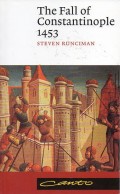
The fall of Constantinople 1453
This classic account shows how the fall of Constantinople in May 1453, after a siege of several weeks, came as a bitter shock to Western Christendom. The city's plight had been neglected, and negli…
- Edition
- -
- ISBN/ISSN
- 0-521-39832-0
- Collation
- xi,256p.; 22 cm.
- Series Title
- -
- Call Number
- 940.1 RUN f

The middles ages, v.1: sources of medieval history
This book of translated materials from the late Roman Empire to the mid-fifteenth century introduces students to the diversity of Medieval culture--covering the variety of lifestyles, ways of think…
- Edition
- -
- ISBN/ISSN
- 0-394-31802-1
- Collation
- xiv, 356 p.; 23 cm.
- Series Title
- -
- Call Number
- 940.1 TIE m

A brief history of the crusades
Why did the medieval Church bless William of Normandy's invasion of Christian England in 1066 and authorize cultural genocide in Provence? How could a Christian army sack Christian Constantinople i…
- Edition
- -
- ISBN/ISSN
- 978-1-84119-766-1
- Collation
- xx; 300p; 20 cm
- Series Title
- -
- Call Number
- 940.18 HIN b

A history of the crusades, v.1: the first Crusade and the foundation..,
This volume deals completely with the First Crusade and the foundation of the kingdom of Jerusalem. As Runciman says in his preface: 'Whether we regard the Crusades as the most tremendous and most …
- Edition
- -
- ISBN/ISSN
- -
- Collation
- xii, 376p.; 20 cm.
- Series Title
- -
- Call Number
- 940.18 RUN h/1

A history of the crusades, v.2: the kingdom of Jerusalem..
In this volume attempted to tell the story of the Frankish states of Outremer from the accession of King Baldwin 1 to the reconquest of Jerusalem by Saladin. It is a story that has been told befor…
- Edition
- -
- ISBN/ISSN
- -
- Collation
- xii,428p.; 24 cm.
- Series Title
- -
- Call Number
- 940.18 RUN h/2
Yale companion Jewish writing and thought in German culture 1096-1996
A unique collection of essays--written by more than one hundred scholars and arranged chronologically--provides a history of Jewish writing and thought in German-speaking lands, highlighting the im…
- Edition
- -
- ISBN/ISSN
- 0-300-06824-7
- Collation
- xxxiv,864p.; 26 cm.
- Series Title
- -
- Call Number
- 943.004 GIL y

The third Reich: a new history
Until now there has been no up-to-date, one-volume, international history of Nazi Germany, despite its being among the most studied phenomena of our time. The Third Reich restores a broad perspecti…
- Edition
- -
- ISBN/ISSN
- 0-809-09326-x
- Collation
- 965p.; 20 cm.
- Series Title
- -
- Call Number
- 943.086 BUR t




 Computer science, information & general works
 Philosophy & psychology
 Religion
 Social sciences
 Language
 Pure Science
 Applied sciences
 Arts & recreation
 Literature
 History & geography