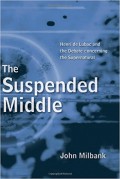
The suspended middle: Henri de Lubac and debate concerning..
French Jesuit Henri de Lubac (1896-1991) was arguably the most revolutionary theologian of the twentieth century. He proposed that Western theology since the early modern period had lost sight of t…
- Edition
- -
- ISBN/ISSN
- 978-0-8028-2899-6
- Collation
- x, 117p.; 22 cm.
- Series Title
- -
- Call Number
- 230.209 MIL s

God's call to young people: sermon for the rising generation
It was a common practice in Puritan churches (particularly in New England) to preach to the young people of the church and the town on a regular basis. Some churches took every eighth Sunday and de…
- Edition
- -
- ISBN/ISSN
- 1-57358-118-6
- Collation
- iv,229p.; 22 cm.
- Series Title
- -
- Call Number
- 252 BAR g

Religion and the scientific future
modernity has changed but by no means eradicated either the necessity for myth or the fundamental forms of its discourse. Scientific understanding through disciplined inquiry of the spatiotemporal …
- Edition
- -
- ISBN/ISSN
- 334-01409-3
- Collation
- x,193p.; 22 cm.
- Series Title
- -
- Call Number
- 261.55 GIL r

The fundamentals for today, v.1
The primary characteristic of the religious picture of our day is flux and change. Heartening, indeed, it is to know that in an age of confusiion and instability, there are certain inalienable and …
- Edition
- -
- ISBN/ISSN
- -
- Collation
- 304p.; 22 cm.
- Series Title
- -
- Call Number
- 230.046 FEI f/1
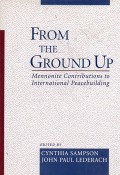
From the ground up: Mennonite contributions to international peace building
In recent years, religion- and culture-based approaches to conflict resolution and peacebuilding have been implemented at both the domestic and international levels. Established conflict resolution…
- Edition
- -
- ISBN/ISSN
- 0-19-514642-X
- Collation
- xv,316p.; 27 cm.
- Series Title
- -
- Call Number
- 261.873 SAM f

The Bible in the church: a popular account of the collection..
This is a pre-1923 historical reproduction that was curated for quality. Quality assurance was conducted on each of these books in an attempt to remove books with imperfections introduced by the di…
- Edition
- -
- ISBN/ISSN
- 0-8010-9627-8
- Collation
- xxiii,316.; 19 cm.
- Series Title
- -
- Call Number
- 262.009 WES b

Life abudant: rethinking theology and economy..
A compelling vision-before it's too late In this splendidly crafted work, McFague argues for theology as an ethical imperative for all thinking Christians: Responsible discipleship today entails di…
- Edition
- -
- ISBN/ISSN
- 978-0-8006-3269-4
- Collation
- xiv,251.; 22 cm.
- Series Title
- -
- Call Number
- 261.8 MCF l

Religious origins of modern science
This study in intellectual history has a dual purpose. As an inquiry into the history of theology it aims to show the profound culture significance of Christian belief in divine creation. At the sa…
- Edition
- -
- ISBN/ISSN
- 0-8028-1683-5
- Collation
- xii,244p.; 21 cm.
- Series Title
- -
- Call Number
- 261.55 KLA r

Documents from Old Testament times
- Edition
- -
- ISBN/ISSN
- 0-06-130085-3
- Collation
- xxiii,302p.; 21 cm.
- Series Title
- -
- Call Number
- 221.1 THO d
- Edition
- -
- ISBN/ISSN
- 0-06-130085-3
- Collation
- xxiii,302p.; 21 cm.
- Series Title
- -
- Call Number
- 221.1 THO d
The ethics of the Talmud: sayings of the fathers
The book called Pirk Aboth, or Sayings of the Fathers, is a collection of the ethical words of wisdom of the "fathers" of post-Biblical Judaism. For centuries it was the most widely read Jewish boo…
- Edition
- -
- ISBN/ISSN
- 0-8052-0023-1
- Collation
- ix,176p.; 20 cm.
- Series Title
- -
- Call Number
- 296.12 HER e
 Computer science, information & general works
 Philosophy & psychology
 Religion
 Social sciences
 Language
 Pure Science
 Applied sciences
 Arts & recreation
 Literature
 History & geography