
A free will: origins of the notion in ancient thought
Where does the notion of free will come from? How and when did it develop, and what did that development involve? In Michael Frede's radically new account of the history of this idea, the notion of…
- Edition
- -
- ISBN/ISSN
- 978-0-520-26848-7
- Collation
- xiv,206p.; 23 cm.
- Series Title
- -
- Call Number
- 123.509 FRE f
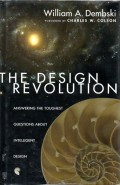
The design revolution: answering the toughest.., c.1-2
Is it science? Is it religion? What exactly is the Design Revolution?Today scientists, mathematicians and philosophers in the intelligent design movement are challenging a certain view of science--…
- Edition
- -
- ISBN/ISSN
- 0-8308-2375-1
- Collation
- 334p.; 24cm
- Series Title
- -
- Call Number
- 124 DEM d.1-2

Merton's palace of nowhere: a search for God through...
Jim Finley is like a glacier, with only a little bit protruding above, but untold depths beneath the surface. I loved how succinct Finley is in this book. His writing is beautiful, packing a great …
- Edition
- -
- ISBN/ISSN
- 0-87793-158-5
- Collation
- 158p.; 20 cm.
- Series Title
- -
- Call Number
- 126 FIN m

The self and the dramas of history
The dialogues of the self with itself, with others and with God. The freedom of the self which makes these dialogues possible. Drama as the historical deposit of the dialogues. Is the dialogue betw…
- Edition
- -
- ISBN/ISSN
- -
- Collation
- ix, 246p.; 24 cm.
- Series Title
- -
- Call Number
- 126 NIE s
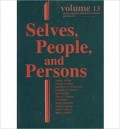
Selves, people and persons: what does it mean to be a self, v.13
The certain knowledge of self-identity is crucial for our sanity. And philosophical traditions as diverse as the Hindu nondualism of Sankara, the Christian philosophy of Augustine, and the modernis…
- Edition
- -
- ISBN/ISSN
- 0-268-001768-9
- Collation
- xvii,210p.; 23 cm.
- Series Title
- -
- Call Number
- 126 ROU s/13

The end of certainty and the beginning of faith: religion and science..
In many ways human advance and even survival depend on the harmonization of our religious and scientific instincts, instincts that have diverged drastically in modern times. The End of Certainty an…
- Edition
- -
- ISBN/ISSN
- 1-57312-262-9
- Collation
- v,181p.; 23 cm.
- Series Title
- -
- Call Number
- 121.63 AUS e

Epistemology: the justification of belief
The basic outline of this book began to take shape about ten years ago when I agreed to teach a course in religious epistemology at Trinity Evangelical Divinity School. After teaching it several ti…
- Edition
- -
- ISBN/ISSN
- 0-87784-340-6
- Collation
- 92p.; 21 cm.
- Series Title
- -
- Call Number
- 121 WOL e

Between belief and unbelief: a clinical physchologist at the Menninger..
"First, a scholarly work on such a "hot" theme as belief and unbelief requires considerable personal involvement and existential engagement on the part of the writer. My ambition to do an honest, s…
- Edition
- -
- ISBN/ISSN
- 0-06-066700-1
- Collation
- xvii, 301p.; 21 cm.
- Series Title
- -
- Call Number
- 121 PRU b

Belief and unbelief: a philosophy of self-knowledge
Atheism is a cruel and long range affair, Jean-Paul Sartre writes in The Words. He thinks he has carried it through. This book opens a new and vital dialogue between the believer and the atheist; t…
- Edition
- -
- ISBN/ISSN
- -
- Collation
- 223p.; 22 cm.
- Series Title
- -
- Call Number
- 121 NOV b

On Kierkegaard and the truth
The author masterfully applies understanding gleaned from a lifetime's study of Kierkegaard to guide the reader through the philosopher's perspectives on truth. The author draws on his symphathy an…
- Edition
- -
- ISBN/ISSN
- 978-0-227-68004-9
- Collation
- xxviii,314p.; 23 cm.
- Series Title
- -
- Call Number
- 121 HOL o



 Computer science, information & general works
 Philosophy & psychology
 Religion
 Social sciences
 Language
 Pure Science
 Applied sciences
 Arts & recreation
 Literature
 History & geography