
Language thought and reality
One cannot speak of the influence of language on thoughts without mentioning the Sapir - Whorf hypothesis . It is the intriguing idea of linguistic relativity, largely attributed to Sapir & Whorf, …
- Edition
- -
- ISBN/ISSN
- 0-262-73006-5
- Collation
- xi,278p.; 21 cm.
- Series Title
- -
- Call Number
- 243 CAR l
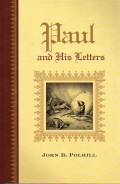
Paul and his letters
Using Acts, the Pauline epistles, and reliable traditions from non-canonical sources, Polhill weaves together the remarkable story of Paul's transformation from persecutor to persecuted, producing …
- Edition
- -
- ISBN/ISSN
- 978-080541097-6
- Collation
- vii,485p.; 24 cm.
- Series Title
- -
- Call Number
- 225.92 POL p
Inerrancy and the church
The issue of inerrancy is not the concern of twentieth-century minds exclusively - the authority of the Bible has been a tenet of the church since its inception. This in-depth investigation into th…
- Edition
- -
- ISBN/ISSN
- 0-8024-0327-1
- Collation
- ix, 422p.; 21 cm.
- Series Title
- -
- Call Number
- 230.13 HAN i

Politics and the Catholic church in Nicaragua
Kirk sets each stage of the church-state debate in a historical continuum, then examines the forty-year period of Somocismo and the Sandinista period (1979-90) that followed. This social revolution…
- Edition
- -
- ISBN/ISSN
- 0-8130-1138-8
- Collation
- xiii, 246p.; 24 cm.
- Series Title
- -
- Call Number
- 282.09 KIR p

Church history: twenty centuries of Catholic Christianity
The author pulls no punches. For example: "Over the years, it has become evident that 'Modernism' ...never existed outside of the minds of Pius X and his curial advisors. ...Modernism was a figment…
- Edition
- -
- ISBN/ISSN
- 0-8091-2686-9
- Collation
- x,427p.; 23 cm.
- Series Title
- -
- Call Number
- 282.09 DWY c

Quarks, chaos & Christianity: questions to science and religion
In a crystal clear discussion of science and religion and their logical friendship in the search for truth and understanding, Polkinghorne draws on discoveries made in atomic physics to make credib…
- Edition
- -
- ISBN/ISSN
- 0-8245-1521-8
- Collation
- xii, 102p.; 21 cm.
- Series Title
- -
- Call Number
- 261.55 POL q
The history of the religion of Israel: an Old Testament theology
In the chapters on each of these periods, many subjects are discussed: the conception of God, ceremonies of religion, prophecy, the messianic hope, the future life, revelation and inspiration, the …
- Edition
- -
- ISBN/ISSN
- 0-8010-7691-9
- Collation
- 685p.; 22 cm.
- Series Title
- -
- Call Number
- 221.076 RAV h

The chosen people in an almost chosen nation
This important volume explores the state of contemporary Jews life and the unprecedented opportunity for meaningful Jewish-Christian dialogue that America's unique culture context presents. Selecte…
- Edition
- -
- ISBN/ISSN
- 0-8028-4929-6
- Collation
- xii,218p.; 23 cm.
- Series Title
- -
- Call Number
- 973.049 NEU c

The anatomy of power
Prof. Galbraith has surpassed himself in this book. Breaking power up into categories, he delves into sources of power, the evolution of power, projection and counter-action. The book is tightly wr…
- Edition
- -
- ISBN/ISSN
- 0-395-34400-X
- Collation
- xv,206p.; 24 cm.
- Series Title
- -
- Call Number
- 303.3 GAL a

The expansion of evangelicalism: the age of..
In The Expansion of Evangelicalism John Wolffe provides an authoritative account of evangelicalism from the 1790s to the 1840s. Making extensive use of primary sources, Wolffe skillfully balances B…
- Edition
- -
- ISBN/ISSN
- 978-0-8308-2582-0
- Collation
- 280p.; 24 cm.
- Series Title
- -
- Call Number
- 274.108 WOL e



 Computer science, information & general works
 Philosophy & psychology
 Religion
 Social sciences
 Language
 Pure Science
 Applied sciences
 Arts & recreation
 Literature
 History & geography