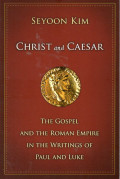
Christ and Caesar: the gospel and the Roman empire.., c.1-4
The slogan 'Paul and the empire' is much in vogue in New Testament scholarship today. In this book the author examines Paul exegetically and shows how the dominant anti-imperial interpretation is a…
- Edition
- -
- ISBN/ISSN
- 978-0-8028-6008-8
- Collation
- xvi,228p.; 23 cm.
- Series Title
- -
- Call Number
- 227.067 KIM c.1-4

Hard sayings of Paul= Ucapan Paulus yang Sulit, c.1-2
Manfred Brauch, drawing on years of pastoral experience and biblical study, takes on forty-eight hard sayings of Paul and offers the kind of help we need. By supplying background and putting these …
- Edition
- -
- ISBN/ISSN
- 0-8308-1282-2
- Collation
- 278p.; 20 cm.
- Series Title
- -
- Call Number
- 227.077 BRA h.1-2

The first Paul: reclaiming the radical visionary behind...., c.1-2
Paul is second only to Jesus as the most important person in the birth of Christianity, and yet he continues to be controversial, even among Christians. How could the letters of Paul be used both t…
- Edition
- -
- ISBN/ISSN
- 978-0-281-06158-7
- Collation
- vi, 230p.; 21 cm.
- Series Title
- -
- Call Number
- 227.077 BOR f.1-2

In defense of the new perspective on Paul: essays and reviews
- Edition
- -
- ISBN/ISSN
- 1-59244-989-1
- Collation
- viii,245p.; 23 cm.
- Series Title
- -
- Call Number
- 227.067 GAR i
- Edition
- -
- ISBN/ISSN
- 1-59244-989-1
- Collation
- viii,245p.; 23 cm.
- Series Title
- -
- Call Number
- 227.067 GAR i

Interpreting the Pauline epistles
One of the issues we must tackle in this book, therefore, is how we move from exegesis to constructing a Pauline theology. Interpreters inevitably move from..
- Edition
- -
- ISBN/ISSN
- 0-8010-8302-8
- Collation
- 167p.; 22 cm.
- Series Title
- -
- Call Number
- 227.066 SCH i

Listening to the text: oral patterning in Paul's letters
in the first ETS studies, the author fills a void with his study of rhetoric methods in the Pauline epistles. Most studies that relate the New Testament writings to therir first-century context hav…
- Edition
- -
- ISBN/ISSN
- 0-8010-2200-2
- Collation
- xviii,357p.; 24 cm.
- Series Title
- -
- Call Number
- 227.066 HAR l

Christianity in the Greco-Roman world: a narrative introduction
Understanding the sociological setting for the New Testament in Asia Minor and Europe--the Greco-Roman world--is essential for correctly interpreting the letters of Paul. Hubbard addresses the real…
- Edition
- -
- ISBN/ISSN
- 978-0-8010-4663-6
- Collation
- xix,320p.; 23 cm.
- Series Title
- -
- Call Number
- 227.067 HUB c
First Thessalonians, Philippians, second Thessalonians..
This packet of five ancient but ever-new letters to first century Chrsitians is a vital witness of how the earliest churches first enfleshed the gospel of Jesus Christ. We read them today not for t…
- Edition
- -
- ISBN/ISSN
- 978-0-8146-2867-6
- Collation
- 125p.; 23 cm.
- Series Title
- -
- Call Number
- 227.077 SMI f
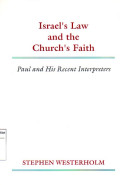
Israel's law and the church's faith: Paul and his recent interpreters, c.1-2
Interest in what the apostle Paul had to say has never been confined to academics. Indeed, gradually - for revolutions of this order take time - the realization is growing among professional schola…
- Edition
- -
- ISBN/ISSN
- 1-57910-233-6
- Collation
- viii,238p.; 21 cm.
- Series Title
- -
- Call Number
- 227.067 WES i.1-2
St. Paul's conception of Christianity
This book is a companion volume to author work on The Kingdom of God, published five years ago. Author have in view to issue a similar work on The Epistle to the Hebrews as soon as author can comma…
- Edition
- -
- ISBN/ISSN
- -
- Collation
- xiii, 404p.; 22 cm.
- Series Title
- -
- Call Number
- 227.066 BRU s



 Computer science, information & general works
 Philosophy & psychology
 Religion
 Social sciences
 Language
 Pure Science
 Applied sciences
 Arts & recreation
 Literature
 History & geography