
History of Protestant theology: particularly in Germany, v.1
The historical commission of the Royal Academy of Sciences at Munich has, under the auspices of Maxmillian II, King of Bavaria, undertaken the issue of a complete history of the sciences in germany…
- Edition
- -
- ISBN/ISSN
- 0-404-02148-4
- Collation
- xxviii, 444p.; 24 cm.
- Series Title
- -
- Call Number
- 230.044 DOR h/1

A history of Christian thought, v.2: from Augustine to..
Because of the nature of the material with which it deals, the history of Christian thought must of necessity be a theological undertaking. The task of the historian does not consist in mere repeti…
- Edition
- -
- ISBN/ISSN
- 0-8028-3907-X
- Collation
- xix,599p.; 26 cm.
- Series Title
- -
- Call Number
- 230.09 GON h/2

The future church of 140 B.C.E.: a hidden revolution
A century and a half before the time of Jesus, a movement of educated Jewish laity initiated a profound transformation of Judaism. Bernard Lee uses this as a metaphor for hidden revolution in the U…
- Edition
- -
- ISBN/ISSN
- 0-8245-1529-3
- Collation
- 218p.; 23 cm.
- Series Title
- -
- Call Number
- 282.73 LEE f

Narratives of a vulnerable God: Christ, theology and Scripture
William Placher confronts challenging questions: Does a theology with a male savior inevitabl contribute to the oppression of women? Does a theology with a suffering savior valorize suffering in a …
- Edition
- -
- ISBN/ISSN
- 0-664-25534-5
- Collation
- xix,187p.; 23 cm.
- Series Title
- -
- Call Number
- 231.6 PLA n

Getting into character: the art of first-person narrative preaching
Every pastor desires to communicate in a fresh way, as evidenced by churches' increased use of new media--but can pastors show biblical stories? Pastor, actor, and playwright Stephen Chapin Garner'…
- Edition
- -
- ISBN/ISSN
- 978-1-58743-218-7
- Collation
- 142p.; 23 cm.
- Series Title
- -
- Call Number
- 251 GAR g

The essential Erasmus: selected and translated with introduction..
In his own day a center of controversy, in the four hundred years since his death known too often solely as an apostle of mockery and irreverence, Erasmus can be seen today in a new light—as a hu…
- Edition
- -
- ISBN/ISSN
- 978-0-452-00972-1
- Collation
- 397p.; 20 cm.
- Series Title
- -
- Call Number
- 230.2 DOL e

Genesis 1-11: torch Bible paperbacks
This volume aims at providing a theological commentary upon the first part of the Book of Genesis. That is to say, its chief purpose is to elucidate the significance of Genesis 1-11 considered as H…
- Edition
- -
- ISBN/ISSN
- 334-00538-8
- Collation
- 134p.; 19 cm.
- Series Title
- -
- Call Number
- 222.11 RIC g

The Gospel of John: a complete analytical exposition
In his Introduction to "The Gospel of John," Dr. Gaebelein discusses the Johannine authorship and "the defeat of the critics." He then considers the purpose of the Gospel, pointing out John's own t…
- Edition
- -
- ISBN/ISSN
- 0-87213-220-X
- Collation
- 414p.; 21 cm.
- Series Title
- -
- Call Number
- 226.506 GAE g

A home for the homeless: a sociological exegesis of 1 Peter, its..
This is the first book-length analysis of 1 Peter from a combined sociological-exegetical perspective. An effort is made to correlate the perspectives, theories, and techniques of exegesis and soci…
- Edition
- -
- ISBN/ISSN
- 0-8006-0659-0
- Collation
- xiv, 306p.; 23 cm.
- Series Title
- -
- Call Number
- 227.92 ELL h
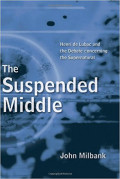
The suspended middle: Henri de Lubac and debate concerning..
French Jesuit Henri de Lubac (1896-1991) was arguably the most revolutionary theologian of the twentieth century. He proposed that Western theology since the early modern period had lost sight of t…
- Edition
- -
- ISBN/ISSN
- 978-0-8028-2899-6
- Collation
- x, 117p.; 22 cm.
- Series Title
- -
- Call Number
- 230.209 MIL s





 Computer science, information & general works
 Philosophy & psychology
 Religion
 Social sciences
 Language
 Pure Science
 Applied sciences
 Arts & recreation
 Literature
 History & geography